
Home > Insights > Knowledge Graphs
This research program is designed for marketing leaders who need reliable data, clear analysis, and practical guidance to strengthen their international strategy and demonstrate global impact.
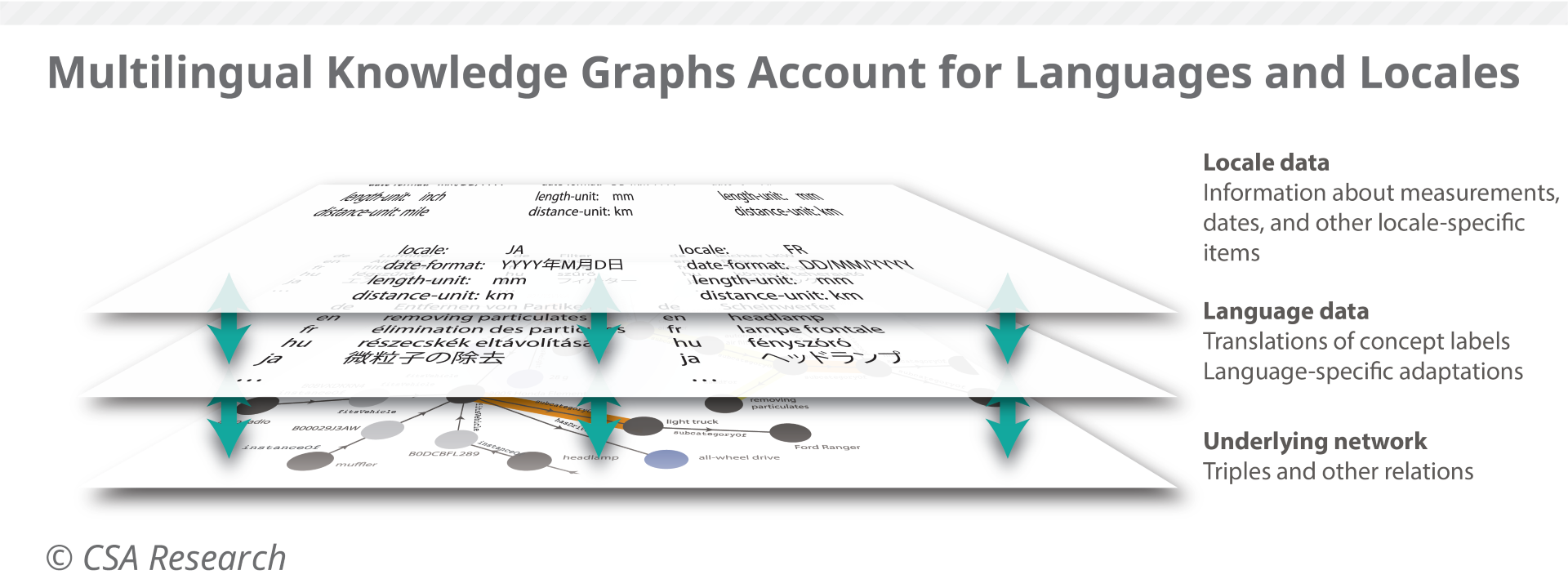
A knowledge graph is a structured map of information. It represents entities (like products, people, or concepts) as nodes, and the connections between them as relationships or edges. This format allows machines to understand not just data, but the context behind it. For example, Google's knowledge graph helps distinguish between Apple the company and apple the fruit by recognizing context and relationships. For a broader perspective on how knowledge graph help organize multilingual data and support content discovery across systems, see our report on taming global content with knowledge graphs.
Context-aware search means faster, more relevant results.
Knowledge graphs bring together information from across departments and platforms.
AI systems perform better when built on structured, contextualized data.
Offer knowledge graphs solutions to clients as a premium service.
Help clients understand and benefit from knowledge graph to elevate your role beyond translation.
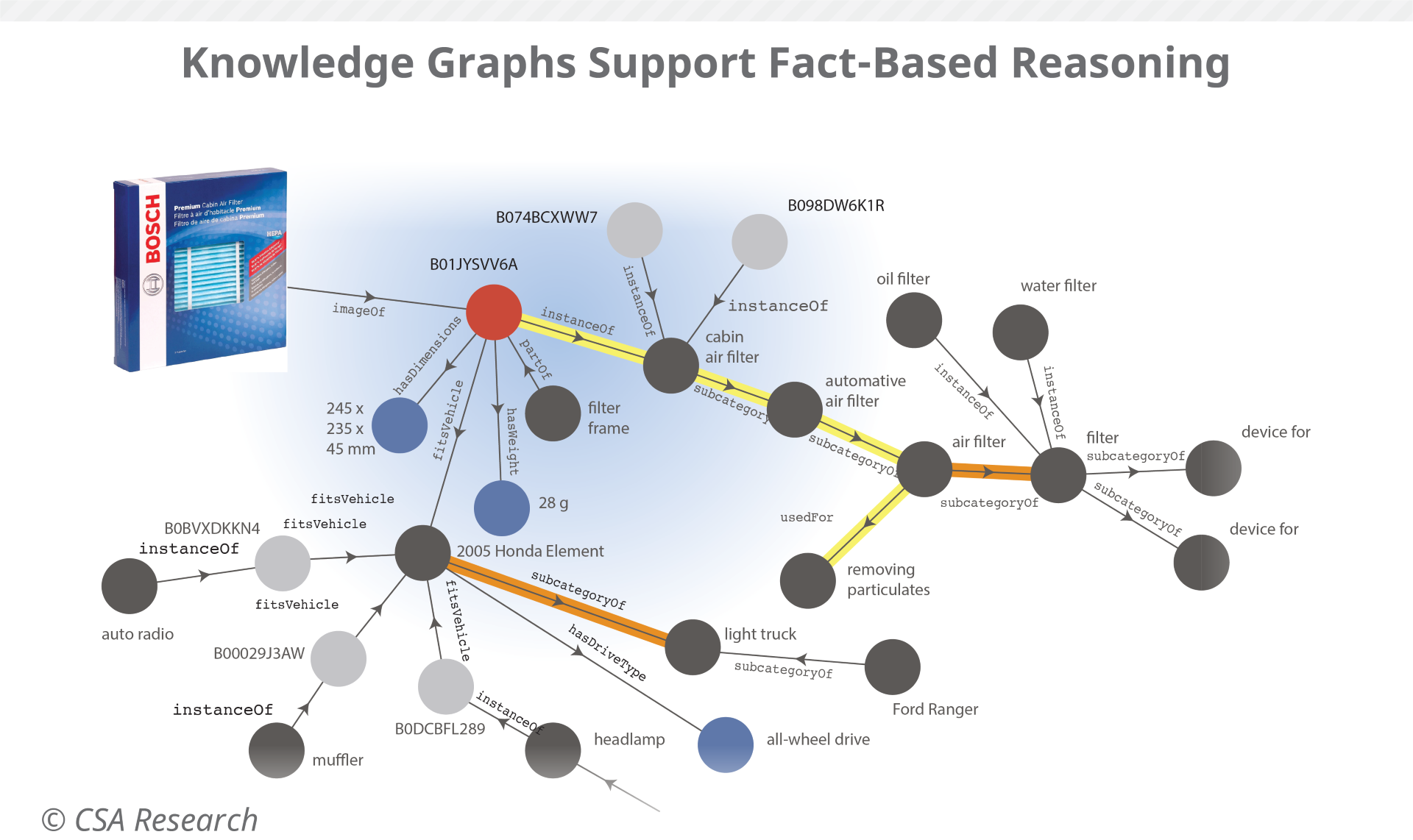
Traditional databases store information in rows and columns. Knowledge graphs go further by capturing the relationships between data points, making them especially useful for complex, multilingual, or global information ecosystems.
They're also language-aware — ideal for companies managing content in multiple languages. In fact, ensuring consistency across these graphs depends heavily on the foundational work of terminology management.
Our recent research highlights why terminologists are essential for reliable knowledge graphs, especially when scalability, and semantic integrity are at stake.
Highlighted Use Cases
Knowledge graphs are particularly valuable in multilingual environments. They enable organizations to connect content and concepts across languages without relying on translation alone. Here are two high-impact ways enterprises and LSPs are putting them to work:
Organizations with global operations often struggle with siloed content in different languages. Knowledge graphs allow users to search in one language and retrieve accurate results across others by connecting equivalent concepts. For example, a search for “Eiffel Tower” can surface results titled Tour Eiffel in French or other localized references, improving enterprise search and customer-facing portals alike.
This case is especially relevant for roles managing global content, internal systems, or digital experience: product owners, heads of IT or localization, and data leads. Sponsors typically include CIOs, CPOs, or CMOs — depending on whether the need is internal search efficiency or external user experience.
Global e-commerce, media, and learning platforms use knowledge graphs to deliver better recommendations. By decoupling content from language and connecting entities like genres, user preferences, or metadata, they can offer personalized results regardless of the original content language. For example, a user watching French documentaries may be shown similar content from other countries — with titles, summaries, and calls to action localized to their preferred language.
You can explore these and other scenarios in the CSA Research report on Fundamentals of Multilingual Knowledge Graphs.
Product executives, heads of personalization, and marketing leaders are often involved in these initiatives. Sponsors typically include Chief Product Officers or Chief Revenue Officers, especially where recommendation engines directly impact user engagement or sales.
AI systems, machine translation, and global content workflows all depend on structured, reliable data. As organizations generate more multilingual content, the ability to connect information meaningfully becomes essential for efficiency, scalability, and insight. Knowledge graphs bridge this gap by transforming scattered data into organized knowledge that supports smarter global operations.
Learn how Automated Quality Estimation and Automated Post-Editing redefine translation efficiency and accuracy.
Explore the report
Access exclusive data, reports, and analyses that power smarter decisions across the global content industry.
Visit the platformAn executive-friendly overview of knowledge graphs, their benefits, and multilingual applications.
Purchase the reportA comprehensive guide to structuring, optimizing, and deploying knowledge graphs for global content management.
Purchase the reportHighlights how terminologists enable accurate, multilingual knowledge graphs through concept modeling, governance, and linguistic precision.
Purchase the reportComplete the form to discuss your research needs or learn how CSA Research can help support your strategic decisions.