Home > Blogs & Events > Blogs
March 3, 2021

In a recent panel discussion moderated by Lionbridge and hosted by Multilingual Magazine the subject of domestic localization needs for individuals who do not speak the dominant language in a country emerged as a topic of discussion. This topic is largely ignored in the United States (and elsewhere), with the exception of certain regulated industries, such as insurance and healthcare. Of course, Spanish is the major non-English language in the U.S. If treated independently, it would be the world’s eleventh-most-significant tongue in economic terms, just behind Italian and just ahead of Dutch. An additional 12 languages spoken in the U.S. surpass at least one official EU language in population and economic power.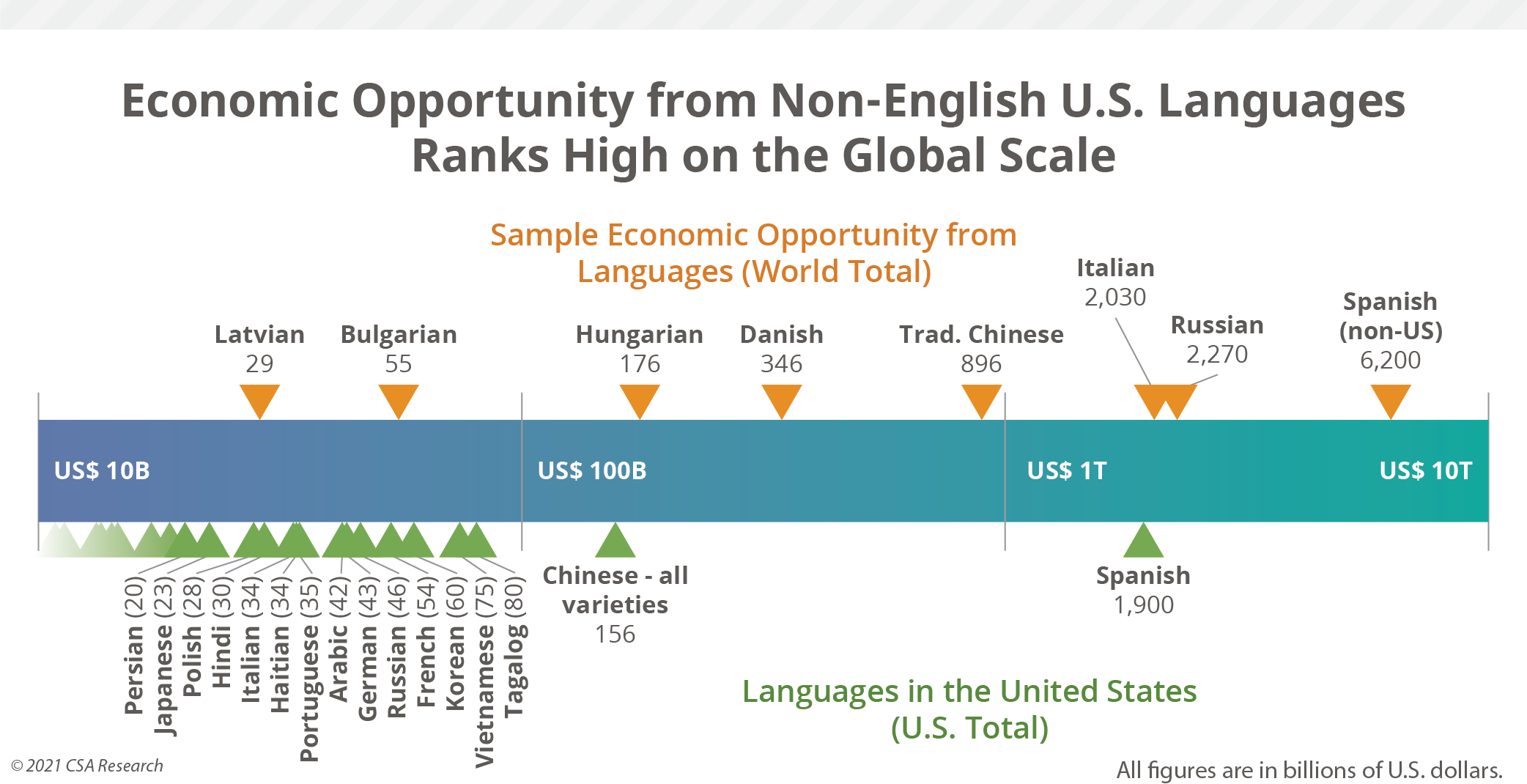
Note: This article is written from a U.S. perspective, but the same lessons apply to brands in other countries, whether it be supermarket chains in Britain that need to support Urdu, Malaysian service companies that support the Chinese expat community, or German insurance firms providing service for Turkish-speaking populations. The United States is one of the largest multilingual countries in the world, but opportunities abound elsewhere for those who look for them.
Despite the size of the opportunity, major brand websites scarcely target these significant U.S.-based communities. Our examination of over 2,800 major brand websites turned up a scant handful that supported U.S. Spanish. Ironically, the ones that did tended to be smaller brands that addressed regional audiences in the U.S. Southwest, Northeast, or Florida. Although quite a few did have Spanish for Puerto Rico, their sites were specific to the island and not targeted at the broader U.S. audience. Beyond Spanish, we uncovered but a single travel brand that addressed a U.S. domestic Chinese audience as part of a broad localization portfolio. To some extent, this paucity of support for populations is understandable because this diversity goes unnoted unless you happen to stumble into an ethnic enclave such as Miami’s Spanish-speaking Cuban exile neighborhoods, Chicago’s Ukrainian Village, or Yiddish-speaking areas in New York City. But for much of the U.S., English is simply assumed.
CSA Research has identified three challenges to greater support for these brands from marketers:
These challenges probably make it sound like addressing these audiences might not be worth the bother, so why would you support other languages in the U.S.? Consider the following three reasons:
Finally, if you head down this path, remember that you need to do the same sorts of market segmentation and analysis you would do for any other target audience. Ethnographic research methods may have entered awareness for the language industry only recently with the LocWorld keynote presentation, but LSPs and localization teams are ideally suited to deliver this sort of service because they are aware of the issues and have the connections needed to do the work. The careful observational methods that ethnographic research entails will also benefit you if you do content audits, market testing, quality evaluation, social media engagement, or any of the other many tasks you should do that involve observing and learning from customers and other stakeholders.
If you need help evaluating the opportunity in the U.S., consult the CSA Research report “Non-English Economic Opportunity in the U.S.” and its accompanying data file, which contains detailed information on 66 non-English languages in the U.S.
Subscribe to our newsletter for updates on the latest research, industry trends, and upcoming events.
Subscribe
After obtaining a BA in linguistics in 1997, I began working for the now-defunct Localization Industry Standards Association (LISA), where I headed up standards development and worked on quality assessment models. At the same time, I completed a...
Connect with Arle LommelOur consulting team helps you apply CSA Research insights to your organization’s
specific challenges, from growth strategy to operational excellence.